When people talk about No. 1 UCLA men's volleyball, the conversation usually opens with the pins flying over the tape or the block closing the seam. Fair enough — the Bruins win with talent at every position. But the quiet engine of almost everything UCLA does in the front row is the same player who has been there before the rally gets loud: Andrew Rowan, the Bruins' senior setter and the conductor of one of the most efficient offenses in the NCAA.
This is a full look at who Rowan is, how he runs UCLA's system, what the numbers say in 2026, and where he fits in the wider picture of American men's volleyball — with USA Volleyball roster portrait photography and NCAA file photos from Pauley Pavilion so you can see the story, not just read it.
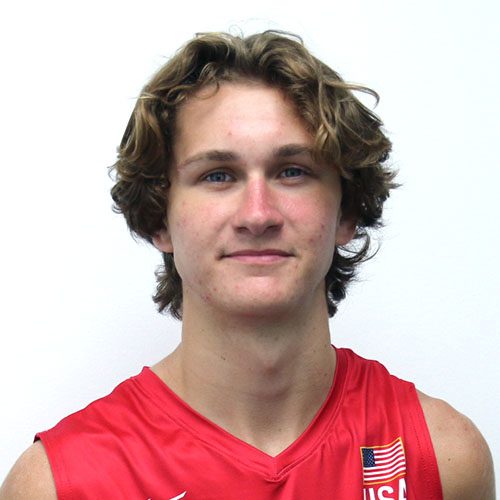
Portrait: USA Volleyball (national-team roster photo).
Why the setter matters at UCLA
In modern men's volleyball, the setter is less "the guy who touches second" and more the live playcaller. Every pass is a data point: Is the pass tight or off? Is the middle early? Is the opposite pinned behind the tempo? Rowan's job is to turn those answers into hittable balls — and to do it without telegraphing UCLA's intentions to a trained block.
UCLA has built its reputation on offensive efficiency: high side-out rates, disciplined first-ball swings, and the ability to stretch a block horizontally before someone takes a vertical shot. That profile demands a setter who can vary release points, freeze middles, and keep pin hitters in rhythm. Rowan checks those boxes at a level that shows up in both the film and the box score.
The 2026 snapshot: production you can measure
Through the stretch of the 2026 regular season that UCLA publishes on its own cumulative statistics page, Rowan's assist volume has been at an elite tier among NCAA setters — on the order of 700+ assists in the team's published team totals, with an assists-per-set figure north of 11 in that same snapshot window. (College volleyball statistics roll forward with every match; always defer to UCLA's official stats PDF and cumulative pages for the latest line.)
Those are not vanity numbers. High assist totals in fewer rotations usually mean clean reception, consistent tempo, and hitters trusting the set. When a program is ranked at the top of the AVCA coaches poll and still pushing efficiency metrics, the setter is usually doing more than "getting away with it."
How Rowan plays: tempo, serve, and competitive edge
Ask coaches what separates good college setters from great ones, and you hear the same themes: hands, footwork, and judgment. Rowan's game layers a fourth item on top: aggression from nine meters.
He is widely credited with a jump serve that can bend a reception pattern — the kind of weapon that does not show up as a "setter stat" in the same row as assists, but absolutely shows up in side-out pressure and in how opponents line up their passers. When the serve is live, UCLA's block-and-defend system gets easier to stack because opponents are not always receiving in-system.
In transition, Rowan's value is speed without panic. The Bruins want enough pace to stress the block, but not so much chaos that hitters are chasing sets. That balance is what lets UCLA's attackers take full swings instead of emergency rolls — and full swings are what produce the gaudy hitting percentages you see next to UCLA's name in MPSF play.
The room: who else plays setter for UCLA?
Rowan is the headline, but depth is part of the story for any elite program.
- Trent Taliaferro (sophomore) has been a high-upside developmental piece who can step in when match flow or practice load calls for it. UCLA's own game notes have highlighted nights where Taliaferro's distribution helped the Bruins maintain offensive rhythm in tight MPSF windows.
- Rafael Urbina (freshman) arrives with international youth experience and the kind of athletic profile programs recruit when they want future flexibility at the position.
Great setter rooms do not "replace" a Rowan lightly; they push him, spell him, and keep practice competitive so UCLA does not plateau when the calendar turns to postseason play.
USA Volleyball and the national pipeline
Rowan's profile is not only a UCLA story. He has been part of the USA Volleyball age-group pipeline — including honors coming out of international youth competition — which matters for two reasons.
First, it explains why his portrait asset lives on the USA Volleyball media path you see at the top of this piece: it is the same visual ecosystem USA Volleyball uses for national-team identification and editorial distribution.
Second, it contextualizes why UCLA recruits him the way it does. The Bruins are not just collecting high school awards; they are collecting players who have already been stress-tested against international tempo and scouting. That matters when the NCAA tournament expands and the margin for error shrinks.
Inside Pauley: what UCLA volleyball feels like in 2026
UCLA plays its home matches in Pauley Pavilion — a building that carries basketball history but, on volleyball nights, becomes a compression chamber for sound when the Bruins go on a run. The program has leaned into premium non-conference tests and MPSF rivalries that double as RPI and narrative builders.
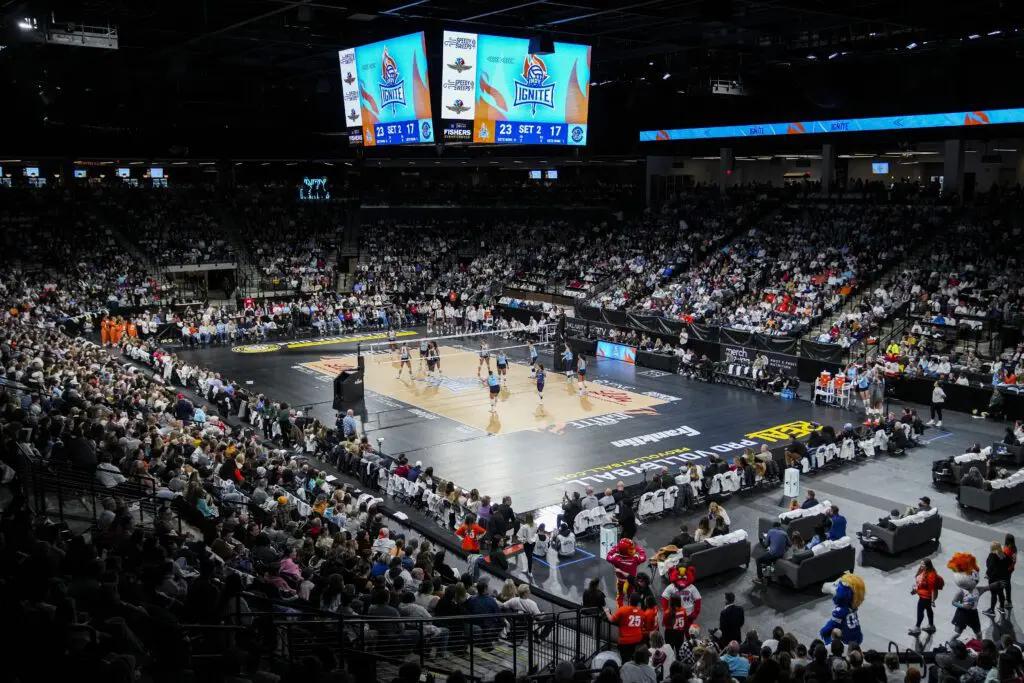
The images below are NCAA.com file photography from UCLA's environment — wide, editorial frames that show the scale of the gym and the speed of the college men's game. They are not necessarily Rowan in a specific rally (file photos rarely carry play-by-play tagging), but they are authentic to how UCLA presents on NCAA platforms.

Action file photo: NCAA.com (UCLA men's volleyball / Pauley Pavilion coverage).

Second action file photo: NCAA.com (alternate crop from UCLA men's volleyball file package).
What scouts watch on film
When professional scouts — overseas clubs, domestic pro pipelines, or national-team staff — study a college setter, they are not only counting assists. They track:
- Location variance — can he set left/right with the same release disguise?
- Middle connection rate — does the quick arrive on time when the pass is only "good enough"?
- Out-of-system solutions — what does he do when the pass hunts the antenna?
- Defensive contribution — can he take space in block schemes and convert digs into counterattacks?
Rowan's resume at UCLA suggests he grades well across those buckets, which is why he remains one of the defining faces of the 2026 college men's season even in a year stacked with elite pins and physical middles.
Looking ahead: postseason and beyond
UCLA enters 2026 positioned as a national-title threat — the kind of program where "regular-season dominance" is the expectation, not the exception. For Rowan, the closing chapter of his Bruin career is less about proving he belongs and more about cementing a legacy: another deep NCAA run, another season of efficient offense, and a body of work that holds up when people compare eras.
If you are new to the Bruins, start with the numbers (UCLA cumulative statistics), then watch a first-ten-points sample of a televised MPSF match. You will see the same pattern repeat: UCLA receives, Rowan organizes, and the attack arrives on time — the simplest sentence in volleyball, and the hardest one to live up to every night.
Sources and credits
- Roster & bio: UCLA Athletics — men's volleyball roster (Andrew Rowan).
- Statistics: UCLA Athletics — men's volleyball cumulative statistics (season-to-date; updates nightly).
- Portrait: USA Volleyball — official Andrew Rowan roster portrait asset.
- Action photography: NCAA.com — UCLA men's volleyball file photo package (editorial crops).
- Context: AVCA coaches poll and MPSF coverage (general season framing).
United Volleyball Network — April 28, 2026.